
Troup County Court Records After Arrest
After a Troup County jail arrest, the first public facts may appear in the jail roster maintained through Sheriff James Woodruff's office: arrest date, arresting agency, booking date, charges, bond fields, and release status. Those fields are not the full court record. The court record begins to take shape through Magistrate first appearance, bond decisions, preliminary or committal hearings, prosecutor review, and filings in State Court or Superior Court. A jail record may use the arresting officer's charge language, while a later court record may show an amended charge, accusation, indictment, dismissal, plea, trial setting, or sentence.
Custody and case status are separate. For custody and booking details, the Troup County jail inmate records page is the better starting point. For booking photos and Georgia's limits on public jail mugshots, use the Troup County jail mugshots page. Court records after a jail arrest focus on the official case path: who filed the charge, which court has it, what hearings have occurred, and what the status means.
Find Troup County Court Records After Arrest
The Troup County Clerk of Courts site links the official case-search portal for Superior and State Court records. During research, the direct field labels in the portal were not inspectable through static fetch because of session and redirect behavior. The portal should still be treated as an official online access channel, with the Clerk phone and counter as the fallback when a case number, older file, certified copy, or portal issue arises.
- Start with the county jail roster to collect the booking name, arrest date, arresting agency, charge wording, and any case number.
- Check the Clerk's case-search portal for a filed State Court or Superior Court case.
- Contact the Clerk at 706-883-1740 if the portal fails or a case number is needed.
- Check Magistrate Court for first appearance, warrant, bond, and preliminary-hearing routing.
- Use the District Attorney's Troup office for felony prosecution and victim-assistance routing, not for jail visitation or bond posting logistics.
The official Troup County Clerk case-search portal is shown below as a session-based access point. The screenshot confirms the official portal page rather than a third-party index.
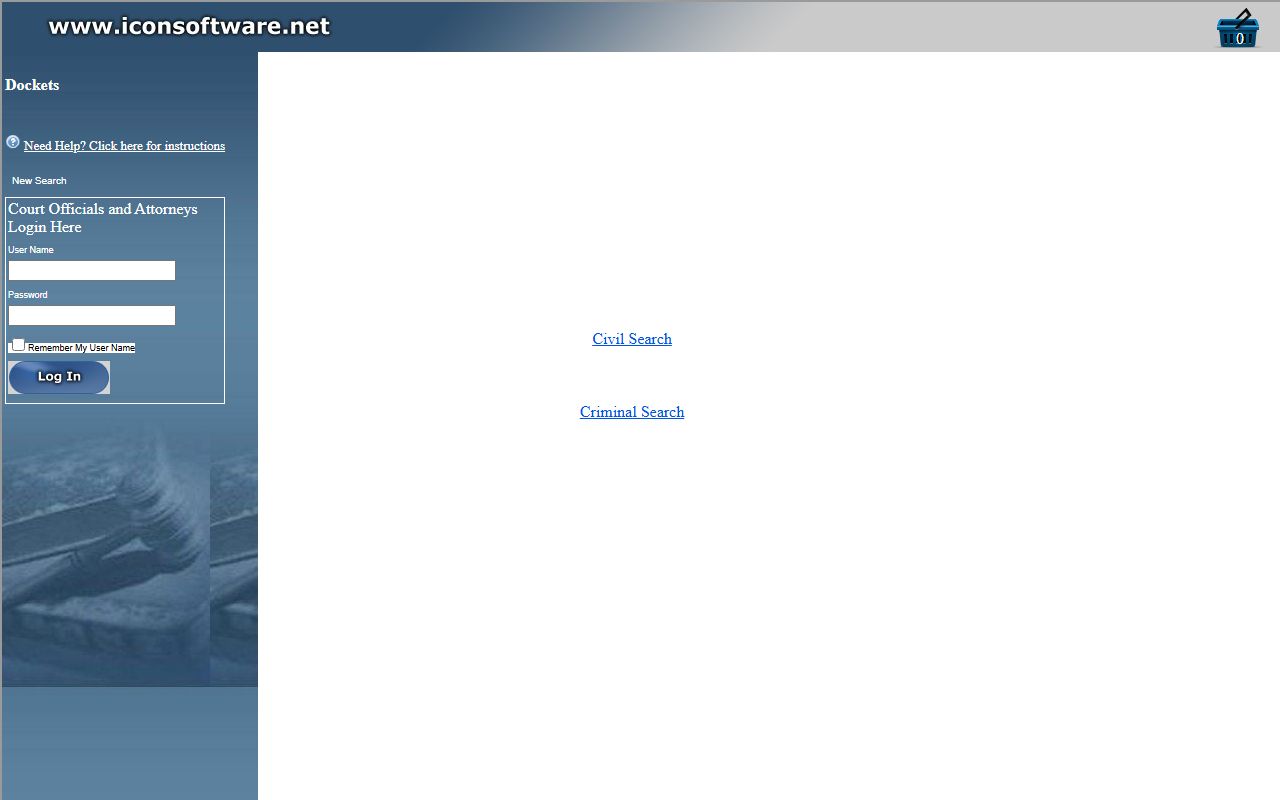
The portal should be paired with the Clerk's phone and counter because older records, certified copies, and session errors may require direct office help.
Troup County Court Record Roles
The court that appears after a jail arrest depends on charge level and stage. Magistrate Court handles warrants, first appearances, bond, and preliminary hearings. State Court has limited jurisdiction over misdemeanor and traffic criminal cases. Superior Court is the felony trial court and handles major criminal matters. The Clerk of Superior and State Courts maintains court documents and court money as required by law.
| Office or Court | Role After Arrest | Contact |
|---|---|---|
| Magistrate Court | Warrants, first appearance, bond, preliminary or committal hearings | 100 Ridley Avenue, 1st floor, 706-883-1695 |
| State Court | Misdemeanor and traffic criminal matters | 100 Ridley Avenue, Suite 2900, 706-883-1727 |
| Superior Court | Felony trial court and major criminal cases | Clerk at 100 Ridley Avenue, 706-883-1740 |
| District Attorney | Felony prosecution for the Coweta Judicial Circuit Troup office | 100 Ridley Avenue, Suite 3500, 706-298-3708 |
Troup County First Appearance Records
The Troup County Magistrate criminal jurisdiction page gives the strongest local timing rule. It says Magistrate Court presides over all first appearance hearings within 48 to 72 hours of arrest. The hearings are held Monday, Wednesday, and Friday mornings by video conference for each jailed defendant charged with a criminal offense. If bail is warranted, Magistrate Court sets bail and may add special conditions to protect individuals and public safety.
A first appearance is not the final court record. It is the first review point after arrest and booking. A preliminary or committal hearing can follow, where the accused has counsel and a prosecutor presents evidence to establish probable cause. If probable cause is found, the case can move forward and bond may be addressed again. For felony cases, the District Attorney and grand jury process may later change the charge list shown in early jail records.
Troup County Charging Documents
Charging documents explain how an arrest charge becomes a court record. Troup County research identifies complaint, accusation or information, and indictment concepts through the court and District Attorney material. The exact document depends on the offense level, prosecutor decision, and court route.
| Document | Who Uses It | What It Means |
|---|---|---|
| Complaint or warrant charge | Law enforcement, Magistrate Court, or prosecutor at the early stage | Initial allegation or warrant basis after arrest or incident report. |
| Accusation / information | Prosecutor | Prosecutor-filed charge document, often used where indictment is not the charging path. |
| Indictment | Grand jury | Formal grand-jury charge, commonly tied to felony prosecution. |
Troup County Charge Status Terms
Charge status changes are common after a jail arrest. A booking charge can be amended, reduced, dismissed, bound over, indicted, or resolved by plea or trial. The District Attorney's FAQ explains that the DA represents the people and laws of Georgia rather than a private complainant, so a victim cannot unilaterally drop charges once prosecution is under state control.
| Status | What It Means |
|---|---|
| Pending | The charge or case is filed but not yet resolved. |
| Bound over | Probable cause was found and the case moves forward from Magistrate stage. |
| Indicted | A grand jury returned a formal felony charge. |
| Amended or reduced | The prosecutor or court changed the charge level or wording. |
| Dismissed / nolle prosequi | The charge ended or the prosecutor declined to continue it. |
| Convicted / acquitted | The case ended in a guilt finding, accepted plea, or not-guilty outcome. |
Bond Records After Troup Arrest
Bond records sit between jail custody and court records. The jail roster can show bond fields, while Magistrate Court sets bail at first appearance if bail is warranted and may add special conditions. Bond can also be revisited at a committal or preliminary hearing if probable cause is established. Official research did not locate Troup County's public bond payment methods, bonding counter hours, accepted payment forms, bondsman rules, or jail bond fee schedule, so those details should be confirmed by phone.
| Bond Type | How It Works |
|---|---|
| Cash bond | Money is deposited directly when allowed and accepted by the proper office. |
| Surety bond | A licensed bail bonding company posts bond when the court and jail permit that path. |
| Property bond | Property secures release when approved under the applicable rules. |
| Personal recognizance | Release is based on a promise to appear and comply with court conditions. |
| No-bond hold | Release is unavailable until a judge or holding agency changes the status. |
Note: A USMS, probation, parole, neighboring-county, or other-agency hold can keep a person in custody even when one Troup County charge shows bond.
Troup County Warrant Court Records
No official public active-warrant search portal was located for Troup County. Magistrate Court is the key official source because it has criminal jurisdiction countywide, including municipalities, and issues criminal arrest warrants for felonies and misdemeanors alleged in the county. A person checking their own warrant status should understand that in-person confirmation at a sheriff or court office can lead to immediate arrest if a warrant is active.
Private misdemeanor warrant applications have a special process. The Magistrate page says the applicant must bring an incident report from law enforcement and complete a warrant application with identifying information. State law requires a pre-execution hearing. That hearing is not a trial and does not decide guilt. It decides whether probable cause exists; if it does, the accused is arrested and bond is established with any special conditions.
Troup Charges vs Convictions
An arrest charge is an allegation at or near booking. A conviction is a court outcome after a plea, verdict, or accepted finding of guilt. Troup County court records after a jail arrest should be read with that distinction in mind because early records can remain public even when a charge is later dismissed, reduced, or otherwise resolved without conviction.
| Charge | Conviction | |
|---|---|---|
| Stage | Allegation, warrant, accusation, or indictment | Final guilt finding or accepted plea |
| Standard | Probable cause or prosecutor filing decision | Proof and court acceptance under criminal procedure |
| Record meaning | Shows what was alleged or filed | Shows the resolved criminal finding |
| Where to verify | Jail roster, Magistrate, Clerk, or DA records | Clerk case disposition and sentencing records |
Troup Court Records Restricted
Georgia commonly uses the term record restriction rather than expungement for many adult criminal-history situations. O.C.G.A. 35-3-37 limits qualifying criminal-history information from non-criminal-justice disclosure. Georgia Courts and Georgia.gov provide public guidance for record restriction after eligible dispositions, but eligibility depends on the case outcome, timing, and record type.
| Restricted | Expunged | |
|---|---|---|
| Georgia use | Common adult process for limiting public criminal-history access. | Often used casually, but Georgia guidance generally frames many cases as restriction. |
| Public access | Limited for qualifying non-criminal-justice disclosure. | Not a blanket promise that all court or agency records vanish. |
| Where to start | Georgia record-restriction guidance, court records, prosecutor, or arresting agency. | Use Georgia-specific legal guidance rather than generic expungement claims. |
Older Troup Court Records
Troup County Archives can matter for historical arrests and older criminal cases. Research notes that the Archives holds Superior Court criminal cases from the early 1800s through 1995 and State Court criminal cases from 1989 through 2010, but it requires a case number from the Clerk. That makes the Clerk's office the first practical stop even when the desired file is old enough to be archival.
Important: Court records after an arrest are not FCRA consumer reports and should not be used for employment, housing, credit, or insurance screening.